AI & ML Models
0.0 (0 reviews) • 0 downloads
5G Network using LSTM Simulation Node in Python Projects
र 1000
5G Network using LSTM Simulation Node in Python Projects
Technical Details
Domain : Python
Database : Sqlite
Tools : Anaconda
Run Tools: VS Code
Database : Sqlite
Tools : Anaconda
Run Tools: VS Code
Secure Payment
Instant Download
GST Invoice
24/7 Support
About This Product
5G Network using LSTM Simulation Node in Python Projects
Abstract
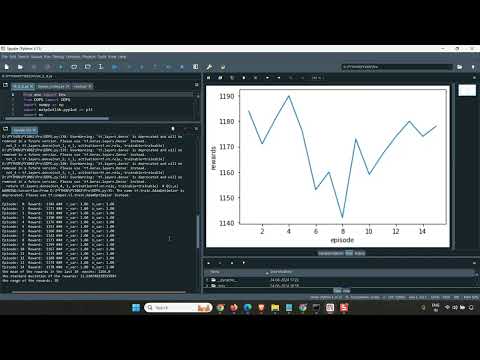
The emergence of 5G technology has transformed wireless communication, enabling ultra-low latency, high bandwidth, and massive connectivity for modern applications such as IoT, smart cities, autonomous vehicles, and augmented reality. However, efficient resource allocation, traffic prediction, and network optimization remain major challenges in 5G networks due to their dynamic and heterogeneous nature. This project, 5G Network using LSTM Simulation Node, focuses on simulating a 5G environment and applying Long Short-Term Memory (LSTM) networks for traffic prediction and node performance analysis. By modeling user demand, mobility patterns, and data flow at simulation nodes, the system uses deep learning to forecast traffic loads, optimize resource distribution, and enhance Quality of Service (QoS). Implemented in Python with frameworks such as TensorFlow, Keras, and NS-3/simulated environments, the project demonstrates how AI-driven prediction can contribute to smarter and more reliable 5G networks.
Existing System
Traditional 5G network simulations often use statistical or rule-based models to predict traffic and manage resource allocation. While these methods provide baseline performance analysis, they struggle with handling the highly nonlinear and time-dependent nature of real-world 5G traffic patterns. Existing systems rely on static simulation models or optimization algorithms that lack adaptability to dynamic conditions, leading to inefficient bandwidth utilization, congestion, and degraded QoS. Moreover, conventional models cannot accurately forecast future node loads, which is crucial for proactive network management. As a result, they fall short in addressing the scalability and complexity of next-generation communication systems.
Proposed System
The proposed system introduces an AI-driven 5G simulation model that integrates LSTM neural networks with simulated 5G network nodes to predict traffic and optimize resource allocation. Instead of relying solely on static models, the system collects time-series data of network parameters such as bandwidth usage, latency, packet loss, and user density at each simulation node. The LSTM model learns temporal dependencies and predicts future node performance, enabling proactive allocation of spectrum and resources. Implemented in Python, the system can be integrated with simulation tools or custom-built environments to visualize 5G node performance under varying conditions. This approach ensures better traffic management, reduces latency, and improves overall QoS. By combining machine learning with network simulation, the project provides a scalable and intelligent solution for 5G performance analysis, making it highly applicable for research, education, and future telecom innovations.
Abstract
The emergence of 5G technology has transformed wireless communication, enabling ultra-low latency, high bandwidth, and massive connectivity for modern applications such as IoT, smart cities, autonomous vehicles, and augmented reality. However, efficient resource allocation, traffic prediction, and network optimization remain major challenges in 5G networks due to their dynamic and heterogeneous nature. This project, 5G Network using LSTM Simulation Node, focuses on simulating a 5G environment and applying Long Short-Term Memory (LSTM) networks for traffic prediction and node performance analysis. By modeling user demand, mobility patterns, and data flow at simulation nodes, the system uses deep learning to forecast traffic loads, optimize resource distribution, and enhance Quality of Service (QoS). Implemented in Python with frameworks such as TensorFlow, Keras, and NS-3/simulated environments, the project demonstrates how AI-driven prediction can contribute to smarter and more reliable 5G networks.
Existing System
Traditional 5G network simulations often use statistical or rule-based models to predict traffic and manage resource allocation. While these methods provide baseline performance analysis, they struggle with handling the highly nonlinear and time-dependent nature of real-world 5G traffic patterns. Existing systems rely on static simulation models or optimization algorithms that lack adaptability to dynamic conditions, leading to inefficient bandwidth utilization, congestion, and degraded QoS. Moreover, conventional models cannot accurately forecast future node loads, which is crucial for proactive network management. As a result, they fall short in addressing the scalability and complexity of next-generation communication systems.
Proposed System
The proposed system introduces an AI-driven 5G simulation model that integrates LSTM neural networks with simulated 5G network nodes to predict traffic and optimize resource allocation. Instead of relying solely on static models, the system collects time-series data of network parameters such as bandwidth usage, latency, packet loss, and user density at each simulation node. The LSTM model learns temporal dependencies and predicts future node performance, enabling proactive allocation of spectrum and resources. Implemented in Python, the system can be integrated with simulation tools or custom-built environments to visualize 5G node performance under varying conditions. This approach ensures better traffic management, reduces latency, and improves overall QoS. By combining machine learning with network simulation, the project provides a scalable and intelligent solution for 5G performance analysis, making it highly applicable for research, education, and future telecom innovations.
Customer Reviews (0)
No reviews yet. Be the first!
Related Products
⭐ Featured

AI & ML Models
Zomato Restaurant Reviews Sentimental Analyzer in Python Projects
Zomato Restaurant Reviews Sentimental Analyzer in Python Projects
र 1000
⭐ Featured
⭐ Featured

AI & ML Models
Voice Disorder Prediction using Audio Dataset in Python Projects
Voice Disorder Prediction using Audio Dataset in Python Projects
र 1000

AI & ML Models
Vitamin Deficiency Detection Using Image Processing in Python Projects
Vitamin Deficiency Detection Using Image Processing in Python Projects
र 1000