AI & ML Models
0.0 (0 reviews) • 0 downloads
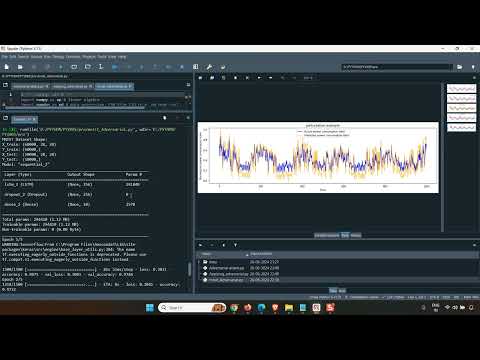
Adversarial Attack Train CNN Analysis in Python Projects
र 1000
Adversarial Attack Train CNN Analysis in Python Projects
Technical Details
Domain : Python
Database : Sqlite
Tools : Anaconda
Run Tools: VS Code
Database : Sqlite
Tools : Anaconda
Run Tools: VS Code
Secure Payment
Instant Download
GST Invoice
24/7 Support
About This Product
Adversarial Attack Train CNN Analysis in Python Projects
Abstract
Deep learning models, especially Convolutional Neural Networks (CNNs), have achieved state-of-the-art performance in image classification, object detection, and recognition tasks. However, they are highly vulnerable to adversarial attacks, where carefully crafted perturbations are added to input data, causing the model to misclassify with high confidence. This poses serious risks in real-world applications such as autonomous driving, healthcare diagnostics, and security systems. This project, Adversarial Attack Train CNN Analysis in Python, focuses on training CNN models and analyzing their performance under adversarial attacks like FGSM (Fast Gradient Sign Method), PGD (Projected Gradient Descent), and DeepFool. By generating adversarial samples, evaluating CNN robustness, and applying defense mechanisms (such as adversarial training or defensive distillation), the project highlights both the weaknesses and possible solutions for improving CNN reliability in adversarial environments.
Existing System
Most existing CNN models are designed and trained for high accuracy on clean datasets such as MNIST, CIFAR-10, or ImageNet. While these models perform well under normal conditions, they lack robustness against adversarial examples. Traditional approaches to mitigate attacks include input preprocessing, gradient masking, and heuristic defenses, but many of these defenses are later proven ineffective against stronger attacks. Existing systems often evaluate CNNs only on clean test sets, ignoring adversarial robustness, which creates a false sense of security. Moreover, very few models in real-world applications integrate adversarial defense techniques due to computational costs and lack of awareness.
Proposed System
The proposed system introduces a Python-based framework to train CNNs and analyze their vulnerability to adversarial attacks. A baseline CNN model is first trained on a standard dataset (e.g., MNIST or CIFAR-10). Then, adversarial attack algorithms such as FGSM, PGD, and Carlini-Wagner are applied to generate perturbed inputs. The system evaluates CNN performance on both clean and adversarial data, highlighting the accuracy drop caused by adversarial samples. To enhance robustness, defense strategies like adversarial training, gradient regularization, or input denoising are implemented and compared. By combining TensorFlow/Keras or PyTorch with adversarial attack libraries (e.g., Foolbox, CleverHans), the system provides a complete experimental setup for understanding vulnerabilities and defenses in CNNs. This contributes to building more reliable AI models for security-critical applications.
Abstract
Deep learning models, especially Convolutional Neural Networks (CNNs), have achieved state-of-the-art performance in image classification, object detection, and recognition tasks. However, they are highly vulnerable to adversarial attacks, where carefully crafted perturbations are added to input data, causing the model to misclassify with high confidence. This poses serious risks in real-world applications such as autonomous driving, healthcare diagnostics, and security systems. This project, Adversarial Attack Train CNN Analysis in Python, focuses on training CNN models and analyzing their performance under adversarial attacks like FGSM (Fast Gradient Sign Method), PGD (Projected Gradient Descent), and DeepFool. By generating adversarial samples, evaluating CNN robustness, and applying defense mechanisms (such as adversarial training or defensive distillation), the project highlights both the weaknesses and possible solutions for improving CNN reliability in adversarial environments.
Existing System
Most existing CNN models are designed and trained for high accuracy on clean datasets such as MNIST, CIFAR-10, or ImageNet. While these models perform well under normal conditions, they lack robustness against adversarial examples. Traditional approaches to mitigate attacks include input preprocessing, gradient masking, and heuristic defenses, but many of these defenses are later proven ineffective against stronger attacks. Existing systems often evaluate CNNs only on clean test sets, ignoring adversarial robustness, which creates a false sense of security. Moreover, very few models in real-world applications integrate adversarial defense techniques due to computational costs and lack of awareness.
Proposed System
The proposed system introduces a Python-based framework to train CNNs and analyze their vulnerability to adversarial attacks. A baseline CNN model is first trained on a standard dataset (e.g., MNIST or CIFAR-10). Then, adversarial attack algorithms such as FGSM, PGD, and Carlini-Wagner are applied to generate perturbed inputs. The system evaluates CNN performance on both clean and adversarial data, highlighting the accuracy drop caused by adversarial samples. To enhance robustness, defense strategies like adversarial training, gradient regularization, or input denoising are implemented and compared. By combining TensorFlow/Keras or PyTorch with adversarial attack libraries (e.g., Foolbox, CleverHans), the system provides a complete experimental setup for understanding vulnerabilities and defenses in CNNs. This contributes to building more reliable AI models for security-critical applications.
Customer Reviews (0)
No reviews yet. Be the first!
Related Products
⭐ Featured
AI & ML Models
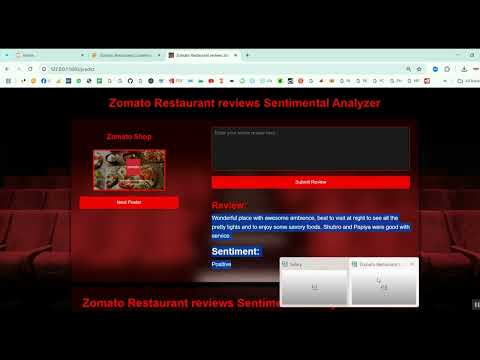
Zomato Restaurant Reviews Sentimental Analyzer in Python Projects
Zomato Restaurant Reviews Sentimental Analyzer in Python Projects
र 1000
⭐ Featured
⭐ Featured

AI & ML Models
Voice Disorder Prediction using Audio Dataset in Python Projects
Voice Disorder Prediction using Audio Dataset in Python Projects
र 1000
AI & ML Models
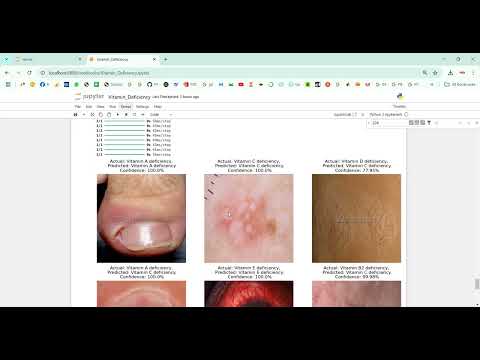
Vitamin Deficiency Detection Using Image Processing in Python Projects
Vitamin Deficiency Detection Using Image Processing in Python Projects
र 1000