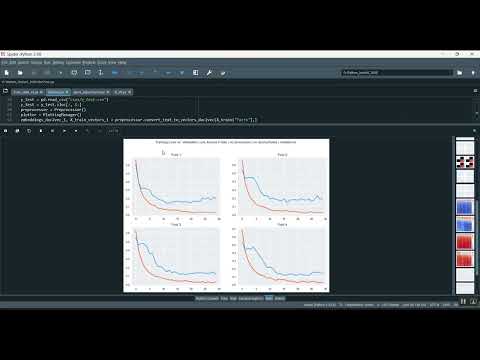
AI & ML Models
0.0 (0 reviews) • 0 downloads
Ai Judgment Prediction in Python Projects
र 1000
Ai Judgment Prediction in Python Projects
Technical Details
Domain : Python
Database : Sqlite
Tools : Anaconda
Run Tools: VS Code
Database : Sqlite
Tools : Anaconda
Run Tools: VS Code
Secure Payment
Instant Download
GST Invoice
24/7 Support
About This Product
Ai Judgment Prediction in Python Projects
Abstract
Judgment prediction using Artificial Intelligence is an emerging field in legal technology that aims to assist lawyers, researchers, and policy makers in predicting court case outcomes based on historical data. Legal documents, case facts, and prior judgments can be analyzed using Natural Language Processing (NLP) and Machine Learning (ML) models to forecast the likely decision of a case. This project, AI Judgment Prediction in Python, leverages machine learning algorithms and deep learning techniques to process court datasets, extract meaningful features, and predict the judgment outcomes. Using Python libraries such as Scikit-learn, TensorFlow/Keras, and NLP frameworks like NLTK or spaCy, the system builds classification models that can learn patterns from past judicial decisions. The project demonstrates how AI can help in legal research, reduce workload, and provide decision support for the justice system.
Existing System
Currently, most legal predictions are performed manually by legal professionals who analyze case histories, legal precedents, and judge tendencies. This traditional approach is highly time-consuming, subjective, and dependent on the expertise of individual lawyers. While some legal research software exists, they mostly provide document retrieval and keyword search rather than predictive analytics. Existing machine learning efforts are limited in scale, as many models rely only on keyword frequency or simple classification approaches, which fail to capture the complex semantic structure of legal text. Moreover, traditional systems cannot handle the large volumes of unstructured case data efficiently.
Proposed System
The proposed system introduces a Python-based AI model for judgment prediction that uses machine learning and NLP techniques to analyze past judgments and predict possible case outcomes. The system preprocesses legal documents through tokenization, lemmatization, and feature extraction methods such as TF-IDF or word embeddings (Word2Vec, GloVe, BERT). These processed features are then fed into classification models such as Logistic Regression, Random Forest, or advanced deep learning models like LSTMs and Transformers to predict the outcome (e.g., “accepted” vs. “rejected” or “guilty” vs. “not guilty”). The system can also highlight key influencing factors from the case text, offering explainability alongside prediction. By automating legal judgment forecasting, the system reduces manual workload, improves decision-making, and provides a valuable tool for legal research and policy development.
Abstract
Judgment prediction using Artificial Intelligence is an emerging field in legal technology that aims to assist lawyers, researchers, and policy makers in predicting court case outcomes based on historical data. Legal documents, case facts, and prior judgments can be analyzed using Natural Language Processing (NLP) and Machine Learning (ML) models to forecast the likely decision of a case. This project, AI Judgment Prediction in Python, leverages machine learning algorithms and deep learning techniques to process court datasets, extract meaningful features, and predict the judgment outcomes. Using Python libraries such as Scikit-learn, TensorFlow/Keras, and NLP frameworks like NLTK or spaCy, the system builds classification models that can learn patterns from past judicial decisions. The project demonstrates how AI can help in legal research, reduce workload, and provide decision support for the justice system.
Existing System
Currently, most legal predictions are performed manually by legal professionals who analyze case histories, legal precedents, and judge tendencies. This traditional approach is highly time-consuming, subjective, and dependent on the expertise of individual lawyers. While some legal research software exists, they mostly provide document retrieval and keyword search rather than predictive analytics. Existing machine learning efforts are limited in scale, as many models rely only on keyword frequency or simple classification approaches, which fail to capture the complex semantic structure of legal text. Moreover, traditional systems cannot handle the large volumes of unstructured case data efficiently.
Proposed System
The proposed system introduces a Python-based AI model for judgment prediction that uses machine learning and NLP techniques to analyze past judgments and predict possible case outcomes. The system preprocesses legal documents through tokenization, lemmatization, and feature extraction methods such as TF-IDF or word embeddings (Word2Vec, GloVe, BERT). These processed features are then fed into classification models such as Logistic Regression, Random Forest, or advanced deep learning models like LSTMs and Transformers to predict the outcome (e.g., “accepted” vs. “rejected” or “guilty” vs. “not guilty”). The system can also highlight key influencing factors from the case text, offering explainability alongside prediction. By automating legal judgment forecasting, the system reduces manual workload, improves decision-making, and provides a valuable tool for legal research and policy development.
Customer Reviews (0)
No reviews yet. Be the first!
Related Products
⭐ Featured
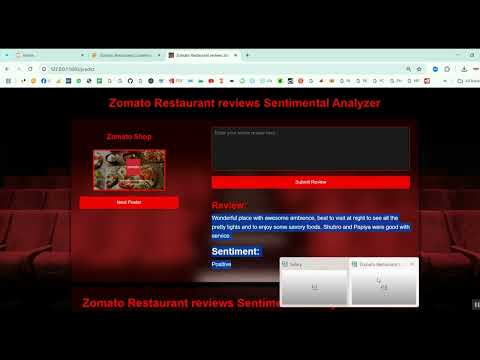
AI & ML Models
Zomato Restaurant Reviews Sentimental Analyzer in Python Projects
Zomato Restaurant Reviews Sentimental Analyzer in Python Projects
र 1000
⭐ Featured
⭐ Featured
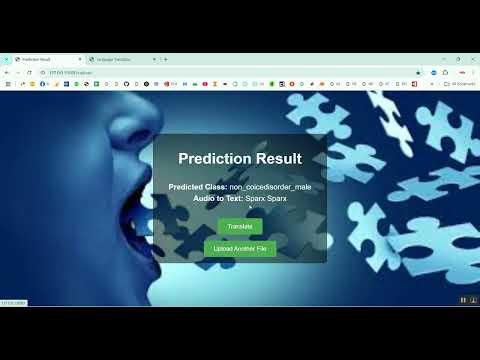
AI & ML Models
Voice Disorder Prediction using Audio Dataset in Python Projects
Voice Disorder Prediction using Audio Dataset in Python Projects
र 1000

AI & ML Models
Vitamin Deficiency Detection Using Image Processing in Python Projects
Vitamin Deficiency Detection Using Image Processing in Python Projects
र 1000