AI & ML Models
0.0 (0 reviews) • 0 downloads
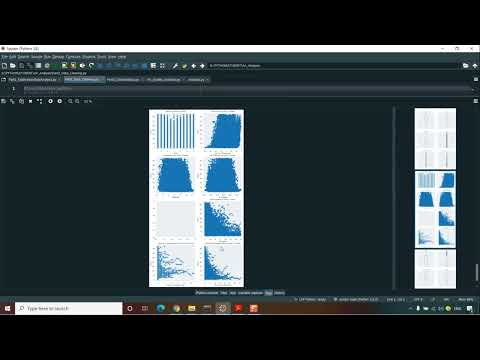
Air Quality Prediction CNN MLP Flask in Python Projects
Air Quality Prediction CNN MLP Flask in Python Projects
Technical Details
Domain : Python
Database : Sqlite
Tools : Anaconda
Run Tools: VS Code
Database : Sqlite
Tools : Anaconda
Run Tools: VS Code
Secure Payment
Instant Download
GST Invoice
24/7 Support
About This Product
Air Quality Prediction CNN MLP Flask in Python Projects
Abstract
Air quality has become a major concern in urban areas due to increasing pollution from vehicles, industries, and other anthropogenic activities. Accurate prediction of air quality is crucial for health monitoring, environmental planning, and policy-making. This project, Air Quality Prediction using CNN–MLP with Flask in Python, aims to design an intelligent system that predicts Air Quality Index (AQI) values based on pollutant concentrations such as PM2.5, PM10, SO₂, NO₂, CO, and O₃. A hybrid deep learning model is developed by combining Convolutional Neural Networks (CNNs) for feature extraction and Multi-Layer Perceptrons (MLPs) for regression/classification. The system is deployed as a Flask web application, allowing users to input air quality parameters and receive instant AQI predictions along with health-related alerts. This real-time, user-friendly tool supports environmental monitoring and decision-making.
Existing System
In the existing scenario, air quality is monitored using government-installed sensors and weather stations, which provide daily or hourly AQI values. However, these systems are often limited to specific locations, making it difficult for individuals in other areas to get accurate local predictions. Some machine learning models (like Linear Regression, SVM, or Random Forest) have been applied for AQI prediction, but they often struggle with non-linear relationships among pollutants and fail to generalize across diverse datasets. Additionally, existing online platforms provide only AQI data visualization and do not allow customized predictions or interactive tools for end-users.
Proposed System
The proposed system introduces a deep learning-based hybrid prediction model that combines CNN and MLP for higher accuracy in AQI forecasting. The CNN extracts spatial and relational features from pollutant data, while the MLP processes these features to predict AQI levels. The model is trained on historical air quality datasets and evaluated to ensure robustness. The system is integrated into a Flask web app, where users can enter pollutant levels and instantly get predicted AQI along with health category labels (e.g., Good, Moderate, Unhealthy). The Flask interface also supports visual charts for pollutant trends and predicted outcomes, making it interactive and user-friendly. This approach outperforms traditional models by leveraging deep learning, ensuring better prediction accuracy and real-time usability for individuals, researchers, and policymakers.
Abstract
Air quality has become a major concern in urban areas due to increasing pollution from vehicles, industries, and other anthropogenic activities. Accurate prediction of air quality is crucial for health monitoring, environmental planning, and policy-making. This project, Air Quality Prediction using CNN–MLP with Flask in Python, aims to design an intelligent system that predicts Air Quality Index (AQI) values based on pollutant concentrations such as PM2.5, PM10, SO₂, NO₂, CO, and O₃. A hybrid deep learning model is developed by combining Convolutional Neural Networks (CNNs) for feature extraction and Multi-Layer Perceptrons (MLPs) for regression/classification. The system is deployed as a Flask web application, allowing users to input air quality parameters and receive instant AQI predictions along with health-related alerts. This real-time, user-friendly tool supports environmental monitoring and decision-making.
Existing System
In the existing scenario, air quality is monitored using government-installed sensors and weather stations, which provide daily or hourly AQI values. However, these systems are often limited to specific locations, making it difficult for individuals in other areas to get accurate local predictions. Some machine learning models (like Linear Regression, SVM, or Random Forest) have been applied for AQI prediction, but they often struggle with non-linear relationships among pollutants and fail to generalize across diverse datasets. Additionally, existing online platforms provide only AQI data visualization and do not allow customized predictions or interactive tools for end-users.
Proposed System
The proposed system introduces a deep learning-based hybrid prediction model that combines CNN and MLP for higher accuracy in AQI forecasting. The CNN extracts spatial and relational features from pollutant data, while the MLP processes these features to predict AQI levels. The model is trained on historical air quality datasets and evaluated to ensure robustness. The system is integrated into a Flask web app, where users can enter pollutant levels and instantly get predicted AQI along with health category labels (e.g., Good, Moderate, Unhealthy). The Flask interface also supports visual charts for pollutant trends and predicted outcomes, making it interactive and user-friendly. This approach outperforms traditional models by leveraging deep learning, ensuring better prediction accuracy and real-time usability for individuals, researchers, and policymakers.
Customer Reviews (0)
No reviews yet. Be the first!
Related Products
⭐ Featured
AI & ML Models
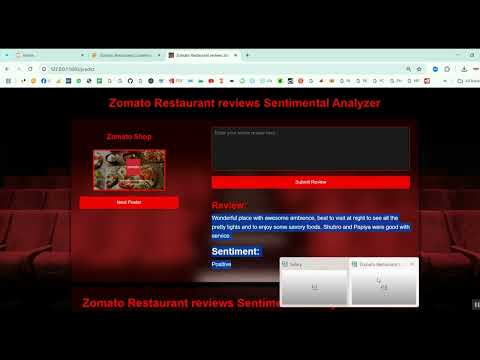
Zomato Restaurant Reviews Sentimental Analyzer in Python Projects
Zomato Restaurant Reviews Sentimental Analyzer in Python Projects
र 1000
⭐ Featured
⭐ Featured
AI & ML Models
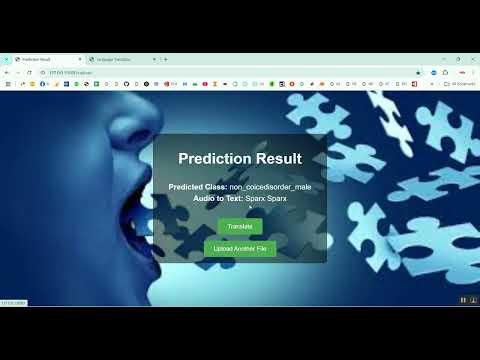
Voice Disorder Prediction using Audio Dataset in Python Projects
Voice Disorder Prediction using Audio Dataset in Python Projects
र 1000
AI & ML Models
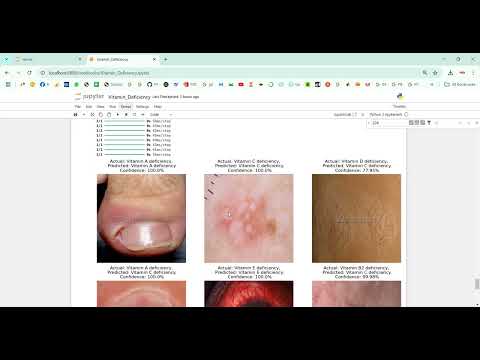
Vitamin Deficiency Detection Using Image Processing in Python Projects
Vitamin Deficiency Detection Using Image Processing in Python Projects
र 1000