Django Projects
0.0 (0 reviews) • 0 downloads
Child Depression ML Classification in Django Python
र 1000
Child Depression ML Classification in Django Python
Technical Details
Domain : Python
Database : Sqlite
Tools : Anaconda
Run Tools: VS Code
Database : Sqlite
Tools : Anaconda
Run Tools: VS Code
Secure Payment
Instant Download
GST Invoice
24/7 Support
About This Product
Child Depression ML Classification in Django Python
Abstract
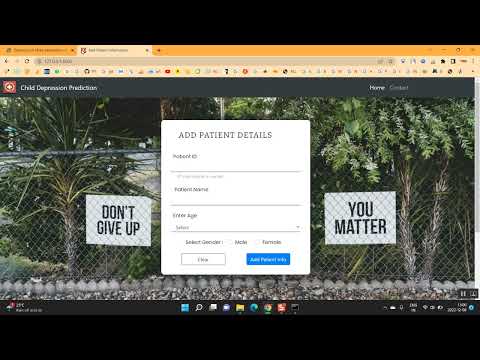
Child depression is a growing mental health concern that often goes unnoticed due to the lack of timely screening and intervention. Traditional assessment methods depend largely on manual evaluations and questionnaires, which are subjective and may miss critical warning signs. The Child Depression ML Classification in Django Python project aims to provide a web-based platform that integrates machine learning models with a user-friendly interface for early detection of depression in children. The system allows professionals (such as psychologists, counselors, or educators) to input behavioral, emotional, and social data, which is then analyzed by a trained ML classifier. The model predicts the likelihood and severity of depression (e.g., none, mild, moderate, severe). Built using the Django framework, the system ensures role-based access, secure data handling, real-time predictions, and detailed reporting. The ultimate goal is to assist healthcare professionals in identifying at-risk children early and providing timely support.
Existing System
Currently, depression detection in children relies heavily on manual surveys, psychological interviews, and teacher/parent observations. These approaches are often time-consuming, inconsistent, and lack predictive accuracy. Furthermore, social stigma and lack of awareness can prevent timely reporting, leading to underdiagnosis. Existing digital solutions are mostly data recording tools rather than intelligent predictive systems. This gap makes it difficult to detect child depression objectively and in real time, delaying early intervention and treatment.
Proposed System
The proposed Django-based Child Depression ML Classification System integrates machine learning into a web application to automate and enhance the screening process. Data collected (behavioral responses, academic performance, social interactions, etc.) is processed by ML models such as Logistic Regression, Random Forest, Support Vector Machine (SVM), or Neural Networks trained on labeled datasets. The system classifies depression levels and provides results via a web-based dashboard. Django manages user authentication, secure database storage, input forms, and result visualization. Features like real-time prediction, history tracking, graphical analysis, and downloadable reports make the system highly practical for professional use. Compared to existing manual systems, this solution offers objective, faster, and more reliable predictions that can help professionals and caregivers intervene at the right time.
Abstract
Child depression is a growing mental health concern that often goes unnoticed due to the lack of timely screening and intervention. Traditional assessment methods depend largely on manual evaluations and questionnaires, which are subjective and may miss critical warning signs. The Child Depression ML Classification in Django Python project aims to provide a web-based platform that integrates machine learning models with a user-friendly interface for early detection of depression in children. The system allows professionals (such as psychologists, counselors, or educators) to input behavioral, emotional, and social data, which is then analyzed by a trained ML classifier. The model predicts the likelihood and severity of depression (e.g., none, mild, moderate, severe). Built using the Django framework, the system ensures role-based access, secure data handling, real-time predictions, and detailed reporting. The ultimate goal is to assist healthcare professionals in identifying at-risk children early and providing timely support.
Existing System
Currently, depression detection in children relies heavily on manual surveys, psychological interviews, and teacher/parent observations. These approaches are often time-consuming, inconsistent, and lack predictive accuracy. Furthermore, social stigma and lack of awareness can prevent timely reporting, leading to underdiagnosis. Existing digital solutions are mostly data recording tools rather than intelligent predictive systems. This gap makes it difficult to detect child depression objectively and in real time, delaying early intervention and treatment.
Proposed System
The proposed Django-based Child Depression ML Classification System integrates machine learning into a web application to automate and enhance the screening process. Data collected (behavioral responses, academic performance, social interactions, etc.) is processed by ML models such as Logistic Regression, Random Forest, Support Vector Machine (SVM), or Neural Networks trained on labeled datasets. The system classifies depression levels and provides results via a web-based dashboard. Django manages user authentication, secure database storage, input forms, and result visualization. Features like real-time prediction, history tracking, graphical analysis, and downloadable reports make the system highly practical for professional use. Compared to existing manual systems, this solution offers objective, faster, and more reliable predictions that can help professionals and caregivers intervene at the right time.
Customer Reviews (0)
No reviews yet. Be the first!
Related Products
⭐ Featured
⭐ Featured

Django Projects
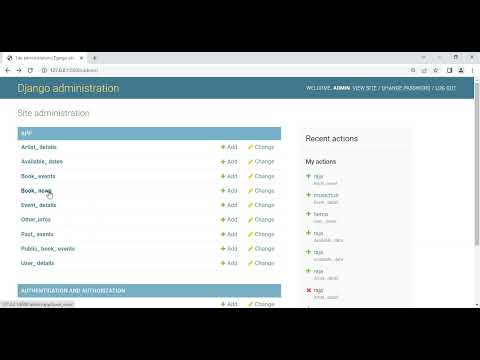
Music Event Booking App in Django Python
Music Event Booking App in Django Python
र 1000
⭐ Featured
Django Projects
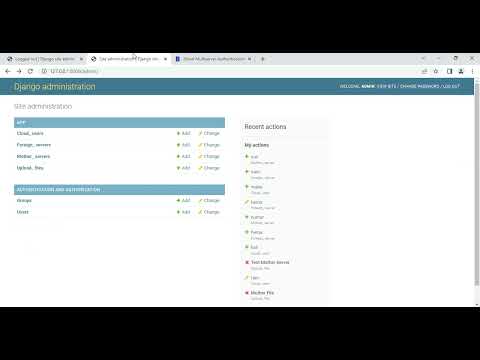
Multi Server Management System in Django Python
Multi Server Management System in Django Python
र 1000
⭐ Featured
Django Projects
Multi Authority Access Control in Django Python
Multi Authority Access Control in Django Python
र 1000