NS2 Simulation
0.0 (0 reviews) • 0 downloads
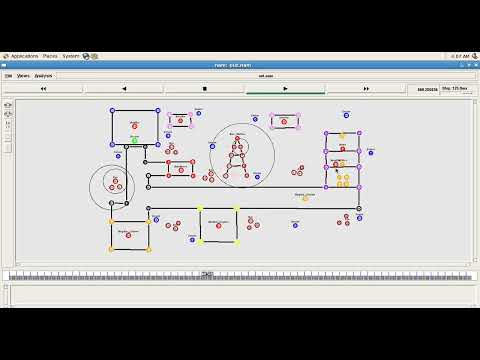
An Efficient and Secure Authentication Scheme for Wireless Body Area Networks
र 1000
An Efficient and Secure Authentication Scheme for Wireless Body Area Networks
Technical Details
Domain : NS2 Simulation
OS : CentOS Linux
Tools : VM Ware Workstation
OS : CentOS Linux
Tools : VM Ware Workstation
Secure Payment
Instant Download
GST Invoice
24/7 Support
About This Product
An Efficient and Secure Authentication Scheme for Wireless Body Area Networks
Abstract
Wireless Body Area Networks (WBANs) enable continuous monitoring of physiological parameters using miniaturized, wearable or implantable sensors. They are fundamental to remote healthcare, fitness tracking, and emergency medical response. However, WBANs operate on resource-constrained nodes and highly sensitive personal data, making secure and efficient authentication a critical challenge. Traditional authentication schemes either impose heavy cryptographic overhead or fail to provide robust protection against active attacks such as impersonation, replay, and eavesdropping. This paper presents an efficient and secure authentication scheme tailored for WBANs. It combines lightweight cryptographic primitives with context-aware key management to deliver strong mutual authentication, data integrity, and privacy preservation with minimal computational and energy cost. Analytical and simulated evaluations show that the proposed approach outperforms conventional methods in terms of security, latency, and power consumption.
Existing System
Most existing WBAN authentication protocols are adapted from general-purpose wireless or IoT security frameworks, relying on heavyweight public key cryptography, static credentials, or centralized authentication servers. While these approaches provide baseline security, they are ill-suited to WBAN constraints such as limited battery capacity, intermittent connectivity, and stringent latency requirements for medical applications. In particular, repeated handshake exchanges and large cryptographic computations drain sensor power and increase response time. Furthermore, many legacy schemes do not protect against insider threats or fail to incorporate physiological context into authentication decisions. Privacy leakage is another persistent issue, as sensitive health data may be exposed during transmission or stored without proper obfuscation. These limitations undermine both security and usability in real-world healthcare scenarios.
Proposed System
The proposed scheme introduces a lightweight, multi-factor authentication mechanism specifically optimized for WBAN environments. It uses a combination of physiological signal-based keys (such as ECG or PPG features) and lightweight symmetric cryptography to establish dynamic session keys between sensors and the gateway node. Mutual authentication is achieved through a one-round challenge–response exchange, reducing latency and energy consumption. A dynamic key update mechanism is triggered by changes in physiological signals or predefined time intervals, thereby limiting key exposure. Privacy is preserved using anonymized identifiers and minimal metadata transmission. Additionally, the scheme integrates a local verification layer at the gateway to offload computations from sensors, while still maintaining end-to-end security to the medical server. This architecture provides robust protection against impersonation, replay, man-in-the-middle, and eavesdropping attacks, while satisfying the stringent power and latency constraints of WBANs.
Abstract
Wireless Body Area Networks (WBANs) enable continuous monitoring of physiological parameters using miniaturized, wearable or implantable sensors. They are fundamental to remote healthcare, fitness tracking, and emergency medical response. However, WBANs operate on resource-constrained nodes and highly sensitive personal data, making secure and efficient authentication a critical challenge. Traditional authentication schemes either impose heavy cryptographic overhead or fail to provide robust protection against active attacks such as impersonation, replay, and eavesdropping. This paper presents an efficient and secure authentication scheme tailored for WBANs. It combines lightweight cryptographic primitives with context-aware key management to deliver strong mutual authentication, data integrity, and privacy preservation with minimal computational and energy cost. Analytical and simulated evaluations show that the proposed approach outperforms conventional methods in terms of security, latency, and power consumption.
Existing System
Most existing WBAN authentication protocols are adapted from general-purpose wireless or IoT security frameworks, relying on heavyweight public key cryptography, static credentials, or centralized authentication servers. While these approaches provide baseline security, they are ill-suited to WBAN constraints such as limited battery capacity, intermittent connectivity, and stringent latency requirements for medical applications. In particular, repeated handshake exchanges and large cryptographic computations drain sensor power and increase response time. Furthermore, many legacy schemes do not protect against insider threats or fail to incorporate physiological context into authentication decisions. Privacy leakage is another persistent issue, as sensitive health data may be exposed during transmission or stored without proper obfuscation. These limitations undermine both security and usability in real-world healthcare scenarios.
Proposed System
The proposed scheme introduces a lightweight, multi-factor authentication mechanism specifically optimized for WBAN environments. It uses a combination of physiological signal-based keys (such as ECG or PPG features) and lightweight symmetric cryptography to establish dynamic session keys between sensors and the gateway node. Mutual authentication is achieved through a one-round challenge–response exchange, reducing latency and energy consumption. A dynamic key update mechanism is triggered by changes in physiological signals or predefined time intervals, thereby limiting key exposure. Privacy is preserved using anonymized identifiers and minimal metadata transmission. Additionally, the scheme integrates a local verification layer at the gateway to offload computations from sensors, while still maintaining end-to-end security to the medical server. This architecture provides robust protection against impersonation, replay, man-in-the-middle, and eavesdropping attacks, while satisfying the stringent power and latency constraints of WBANs.
Customer Reviews (0)
No reviews yet. Be the first!
Related Products
⭐ Featured
NS2 Simulation
W-GeoR Weighted Geographical Routing for VANET's Health Monitoring Applications in Urban Traffic Networks
W-GeoR Weighted Geographical Routing for VANET's Health Monitoring Applications in Urban Traffic Networks
र 1000
⭐ Featured
NS2 Simulation
Reliability-Aware Multi-Objective Optimization-Based Routing Protocol for VANET
Reliability-Aware Multi-Objective Optimization-Based Routing Protocol for VANET
र 1000
⭐ Featured
NS2 Simulation
PSEBVC Provably Secure ECC and Biometric Based Authentication Framework Using Smartphone for Vehicular Cloud Environment
PSEBVC Provably Secure ECC and Biometric Based Authentication Framework Using Smartphone for Vehicular Cloud Environment
र 1000
⭐ Featured
NS2 Simulation
Notice of Removal An Improved Equal Hierarchical Cluster-Based Routing Protocol for EH-WSNs to Enhance Balanced Utilization of Harvested Energy
Notice of Removal An Improved Equal Hierarchical Cluster-Based Routing Protocol for EH-WSNs to Enhance Balanced Utilization of Harvested Energy
र 1000