Matlab Projects
0.0 (0 reviews) • 0 downloads
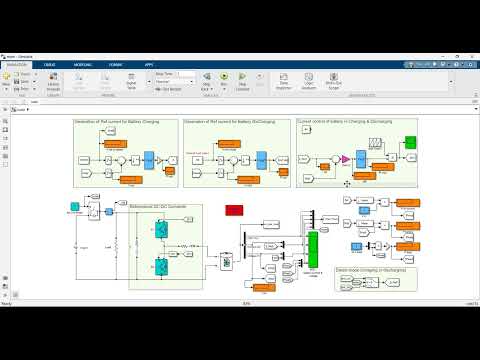
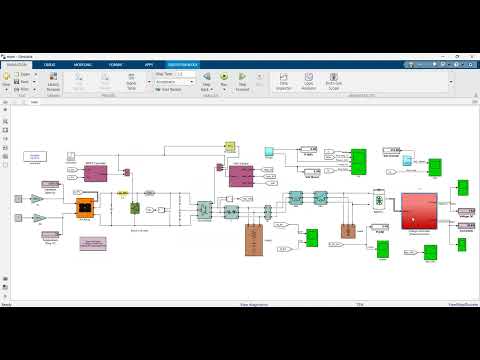
Battery Charge discharge from DC Source Bi Directional DC Convert
र 1000
Battery Charge discharge from DC Source Bi Directional DC Convert
Technical Details
Domain : MATLAB
Tools : Matlab 2021a
Tools : Matlab 2021a
Secure Payment
Instant Download
GST Invoice
24/7 Support
About This Product
Battery Charge discharge from DC Source Bi Directional DC Convert
Abstract
With the increasing use of renewable energy and electric vehicles, efficient battery energy storage systems (BESS) have become essential for stabilizing DC microgrids and off-grid systems. A bi-directional DC–DC converter enables seamless charging and discharging of a battery from a DC source, allowing energy flow in both directions. In charging mode, power flows from the DC source to the battery, while in discharging mode, the battery supplies energy back to the load or grid. This paper presents a design and control strategy for a bi-directional DC converter capable of maintaining high efficiency, wide input/output voltage ranges, and smooth transition between charging and discharging. The approach improves system reliability and optimizes battery life for applications in renewable integration, backup systems, and electric mobility.
Existing System
Conventional battery charging systems typically use unidirectional DC–DC converters, which allow energy to flow only from the source to the battery. To discharge the battery back to the load or grid, a separate converter or inverter stage is usually required. This approach increases cost, footprint, and conversion losses. Additionally, many existing systems use fixed switching patterns and lack intelligent control, resulting in poor efficiency under varying load or source conditions. Without bidirectional control, regenerative braking in EVs or energy recovery in renewable systems cannot be effectively realized, and battery state of charge (SOC) management remains rudimentary.
Proposed System
The proposed system implements a bi-directional DC–DC converter—typically a half-bridge or full-bridge topology—that operates as a buck converter during charging mode and as a boost converter during discharging mode. The converter uses a high-frequency MOSFET/IGBT switching network with synchronous rectification to achieve high efficiency in both directions. A digital controller (microcontroller or DSP) monitors battery parameters such as voltage, current, temperature, and SOC to determine optimal charging/discharging currents. Smooth mode transition is accomplished via a closed-loop control scheme using current and voltage feedback. This design allows:
Energy recovery during discharging or regenerative events.
Extended battery life through controlled charging profiles.
Reduced system cost and complexity by replacing two separate converters with one.
The system can be integrated into solar DC microgrids, electric vehicle powertrains, and UPS/backup systems, providing a compact, efficient, and versatile power interface.
Abstract
With the increasing use of renewable energy and electric vehicles, efficient battery energy storage systems (BESS) have become essential for stabilizing DC microgrids and off-grid systems. A bi-directional DC–DC converter enables seamless charging and discharging of a battery from a DC source, allowing energy flow in both directions. In charging mode, power flows from the DC source to the battery, while in discharging mode, the battery supplies energy back to the load or grid. This paper presents a design and control strategy for a bi-directional DC converter capable of maintaining high efficiency, wide input/output voltage ranges, and smooth transition between charging and discharging. The approach improves system reliability and optimizes battery life for applications in renewable integration, backup systems, and electric mobility.
Existing System
Conventional battery charging systems typically use unidirectional DC–DC converters, which allow energy to flow only from the source to the battery. To discharge the battery back to the load or grid, a separate converter or inverter stage is usually required. This approach increases cost, footprint, and conversion losses. Additionally, many existing systems use fixed switching patterns and lack intelligent control, resulting in poor efficiency under varying load or source conditions. Without bidirectional control, regenerative braking in EVs or energy recovery in renewable systems cannot be effectively realized, and battery state of charge (SOC) management remains rudimentary.
Proposed System
The proposed system implements a bi-directional DC–DC converter—typically a half-bridge or full-bridge topology—that operates as a buck converter during charging mode and as a boost converter during discharging mode. The converter uses a high-frequency MOSFET/IGBT switching network with synchronous rectification to achieve high efficiency in both directions. A digital controller (microcontroller or DSP) monitors battery parameters such as voltage, current, temperature, and SOC to determine optimal charging/discharging currents. Smooth mode transition is accomplished via a closed-loop control scheme using current and voltage feedback. This design allows:
Energy recovery during discharging or regenerative events.
Extended battery life through controlled charging profiles.
Reduced system cost and complexity by replacing two separate converters with one.
The system can be integrated into solar DC microgrids, electric vehicle powertrains, and UPS/backup systems, providing a compact, efficient, and versatile power interface.
Customer Reviews (0)
No reviews yet. Be the first!
Related Products
⭐ Featured
⭐ Featured
Matlab Projects
Hybrid Photovoltaic and Wind power system
Hybrid Photovoltaic and Wind power system
र 1000
⭐ Featured
Matlab Projects
PV System with optimization algorithms
PV System with optimization algorithms
र 1000