Matlab Projects
0.0 (0 reviews) • 0 downloads
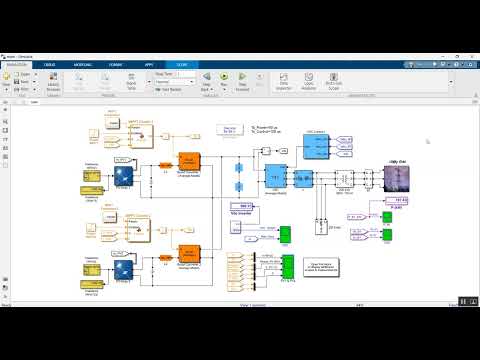
Grid-Connected PV Array
र 1000
Grid-Connected PV Array
Technical Details
Domain : MATLAB
Tools : Matlab 2021a
Tools : Matlab 2021a
Secure Payment
Instant Download
GST Invoice
24/7 Support
About This Product
Grid-Connected PV Array
Abstract
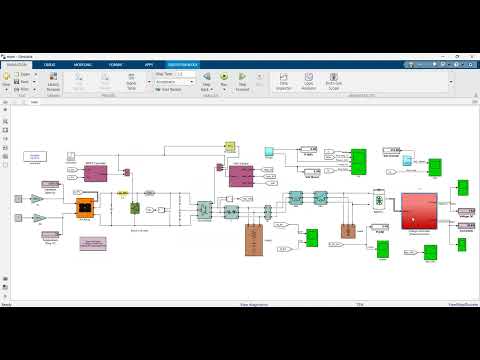
A grid-connected photovoltaic (PV) array converts solar energy directly into electricity and delivers it to the utility grid, offsetting energy demand and reducing greenhouse gas emissions. Such systems consist of PV modules, a power conditioning unit (inverter), protection and metering equipment, and optional energy storage. Unlike stand-alone systems, grid-connected PV arrays do not rely solely on batteries; instead, they use the grid as a virtual energy buffer, exporting surplus power and importing electricity during low solar production. This paper focuses on the design and control of grid-connected PV arrays, emphasizing maximum power point tracking (MPPT), inverter synchronization with the grid, and compliance with grid codes to ensure safety, stability, and high power quality.
Existing System
Conventional grid-connected PV systems typically use a centralized inverter topology with basic MPPT and simple grid synchronization. While cost-effective, these systems often experience suboptimal energy harvest due to module mismatch, partial shading, and fixed MPPT strategies. Harmonic distortion, voltage flicker, and inadequate islanding detection may occur if power conditioning units are not designed to meet modern grid standards. Moreover, many existing systems lack advanced features such as reactive power support, fault ride-through, and integrated energy storage, which are increasingly important as PV penetration rises. These limitations can reduce reliability, efficiency, and compatibility with evolving smart-grid requirements.
Proposed System
The proposed grid-connected PV array employs module-level MPPT or string-level converters combined with a smart inverter capable of advanced grid-support functions. Key features include:
High-efficiency MPPT: adaptive or distributed MPPT algorithms to maximize energy harvest under partial shading and changing irradiance.
Grid-code compliant inverter: low total harmonic distortion (THD), fast dynamic response, active/reactive power control, and low-voltage ride-through (LVRT) capability.
Synchronization and protection: phase-locked loop (PLL) for precise grid synchronization, anti-islanding detection, surge protection, and fault isolation.
Monitoring and communication: real-time performance data (voltage, current, power, and fault status) accessible via IoT/cloud platforms for predictive maintenance and energy management.
Optional storage integration: a hybrid architecture that incorporates battery energy storage for peak-shaving, backup, or self-consumption optimization.
This enhanced approach results in higher energy yield, improved power quality, and stronger resilience against grid disturbances. It also positions the PV array to serve as an active participant in the smart grid, supporting voltage regulation and ancillary services.
Abstract
A grid-connected photovoltaic (PV) array converts solar energy directly into electricity and delivers it to the utility grid, offsetting energy demand and reducing greenhouse gas emissions. Such systems consist of PV modules, a power conditioning unit (inverter), protection and metering equipment, and optional energy storage. Unlike stand-alone systems, grid-connected PV arrays do not rely solely on batteries; instead, they use the grid as a virtual energy buffer, exporting surplus power and importing electricity during low solar production. This paper focuses on the design and control of grid-connected PV arrays, emphasizing maximum power point tracking (MPPT), inverter synchronization with the grid, and compliance with grid codes to ensure safety, stability, and high power quality.
Existing System
Conventional grid-connected PV systems typically use a centralized inverter topology with basic MPPT and simple grid synchronization. While cost-effective, these systems often experience suboptimal energy harvest due to module mismatch, partial shading, and fixed MPPT strategies. Harmonic distortion, voltage flicker, and inadequate islanding detection may occur if power conditioning units are not designed to meet modern grid standards. Moreover, many existing systems lack advanced features such as reactive power support, fault ride-through, and integrated energy storage, which are increasingly important as PV penetration rises. These limitations can reduce reliability, efficiency, and compatibility with evolving smart-grid requirements.
Proposed System
The proposed grid-connected PV array employs module-level MPPT or string-level converters combined with a smart inverter capable of advanced grid-support functions. Key features include:
High-efficiency MPPT: adaptive or distributed MPPT algorithms to maximize energy harvest under partial shading and changing irradiance.
Grid-code compliant inverter: low total harmonic distortion (THD), fast dynamic response, active/reactive power control, and low-voltage ride-through (LVRT) capability.
Synchronization and protection: phase-locked loop (PLL) for precise grid synchronization, anti-islanding detection, surge protection, and fault isolation.
Monitoring and communication: real-time performance data (voltage, current, power, and fault status) accessible via IoT/cloud platforms for predictive maintenance and energy management.
Optional storage integration: a hybrid architecture that incorporates battery energy storage for peak-shaving, backup, or self-consumption optimization.
This enhanced approach results in higher energy yield, improved power quality, and stronger resilience against grid disturbances. It also positions the PV array to serve as an active participant in the smart grid, supporting voltage regulation and ancillary services.
Customer Reviews (0)
No reviews yet. Be the first!
Related Products
⭐ Featured
⭐ Featured
Matlab Projects
Hybrid Photovoltaic and Wind power system
Hybrid Photovoltaic and Wind power system
र 1000
⭐ Featured
Matlab Projects
PV System with optimization algorithms
PV System with optimization algorithms
र 1000