Matlab Projects
0.0 (0 reviews) • 0 downloads
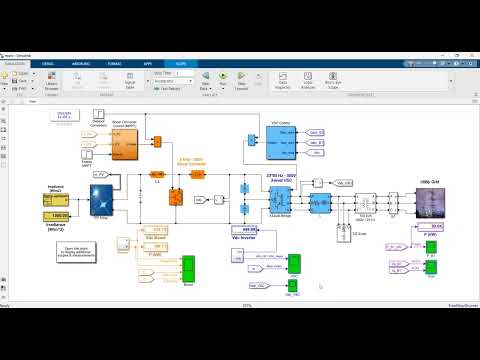
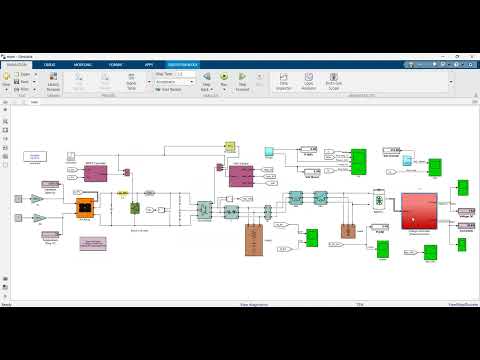
Grid-Connected PV Array MPPT Controller using Incremental Conductance + Integral Regulator
र 1000
Grid-Connected PV Array MPPT Controller using Incremental Conductance + Integral Regulator
Technical Details
Domain : MATLAB
Tools : Matlab 2021a
Tools : Matlab 2021a
Secure Payment
Instant Download
GST Invoice
24/7 Support
About This Product
Grid-Connected PV Array MPPT Controller using Incremental Conductance + Integral Regulator
Abstract
Grid-connected photovoltaic (PV) systems require efficient Maximum Power Point Tracking (MPPT) to maximize energy harvest under changing irradiance and temperature conditions. The Incremental Conductance (IncCond) method is a widely used MPPT technique that determines the MPP by comparing incremental and instantaneous conductance of the PV array. However, conventional IncCond can exhibit steady-state oscillations and slow convergence. This paper presents an enhanced MPPT controller for a grid-connected PV array that combines the Incremental Conductance method with an Integral Regulator (IR). The integral regulator reduces oscillations and improves dynamic performance, ensuring fast and accurate tracking of the true MPP. Simulation and experimental results show that this hybrid approach improves both transient response and steady-state stability compared with traditional MPPT methods.
Existing System
Traditional grid-connected PV systems often employ P&O or standard IncCond MPPT algorithms to adjust the duty cycle of the DC–DC converter feeding the inverter. Although effective under moderate conditions, these methods suffer from:
Oscillations near the MPP due to fixed step size adjustments, leading to small but continuous power loss.
Slow convergence during rapid irradiance or temperature changes.
Limited stability in grid-connected operation where the inverter imposes dynamic voltage conditions.
Additionally, standard controllers frequently rely on simple proportional adjustments without integral action, which can leave a steady-state error and reduce the maximum achievable power.
Proposed System
The proposed MPPT controller combines Incremental Conductance with an Integral Regulator to achieve precise and stable tracking:
Incremental Conductance Core: measures the instantaneous conductance (I/V) and incremental conductance (ΔI/ΔV) of the PV array to accurately detect the MPP condition (ΔI/ΔV = –I/V).
Integral Regulator: processes the error between the measured operating point and the calculated MPP, integrating it over time to eliminate steady-state error and minimize oscillations.
Fast Dynamic Response: the integral action accelerates convergence during sudden irradiance changes while maintaining stability.
Grid Compatibility: the controller interacts smoothly with the grid-tied inverter’s DC-link voltage control, ensuring maximum power transfer without disrupting grid synchronization.
Implementation: the algorithm runs on a digital controller (DSP or microcontroller) that drives a DC–DC converter (boost or buck–boost), feeding the inverter stage.
This hybrid MPPT approach improves energy extraction efficiency, reduces power ripple at the inverter input, and enhances the reliability of grid-connected PV arrays under rapidly changing environmental conditions.
Abstract
Grid-connected photovoltaic (PV) systems require efficient Maximum Power Point Tracking (MPPT) to maximize energy harvest under changing irradiance and temperature conditions. The Incremental Conductance (IncCond) method is a widely used MPPT technique that determines the MPP by comparing incremental and instantaneous conductance of the PV array. However, conventional IncCond can exhibit steady-state oscillations and slow convergence. This paper presents an enhanced MPPT controller for a grid-connected PV array that combines the Incremental Conductance method with an Integral Regulator (IR). The integral regulator reduces oscillations and improves dynamic performance, ensuring fast and accurate tracking of the true MPP. Simulation and experimental results show that this hybrid approach improves both transient response and steady-state stability compared with traditional MPPT methods.
Existing System
Traditional grid-connected PV systems often employ P&O or standard IncCond MPPT algorithms to adjust the duty cycle of the DC–DC converter feeding the inverter. Although effective under moderate conditions, these methods suffer from:
Oscillations near the MPP due to fixed step size adjustments, leading to small but continuous power loss.
Slow convergence during rapid irradiance or temperature changes.
Limited stability in grid-connected operation where the inverter imposes dynamic voltage conditions.
Additionally, standard controllers frequently rely on simple proportional adjustments without integral action, which can leave a steady-state error and reduce the maximum achievable power.
Proposed System
The proposed MPPT controller combines Incremental Conductance with an Integral Regulator to achieve precise and stable tracking:
Incremental Conductance Core: measures the instantaneous conductance (I/V) and incremental conductance (ΔI/ΔV) of the PV array to accurately detect the MPP condition (ΔI/ΔV = –I/V).
Integral Regulator: processes the error between the measured operating point and the calculated MPP, integrating it over time to eliminate steady-state error and minimize oscillations.
Fast Dynamic Response: the integral action accelerates convergence during sudden irradiance changes while maintaining stability.
Grid Compatibility: the controller interacts smoothly with the grid-tied inverter’s DC-link voltage control, ensuring maximum power transfer without disrupting grid synchronization.
Implementation: the algorithm runs on a digital controller (DSP or microcontroller) that drives a DC–DC converter (boost or buck–boost), feeding the inverter stage.
This hybrid MPPT approach improves energy extraction efficiency, reduces power ripple at the inverter input, and enhances the reliability of grid-connected PV arrays under rapidly changing environmental conditions.
Customer Reviews (0)
No reviews yet. Be the first!
Related Products
⭐ Featured
⭐ Featured
Matlab Projects
Hybrid Photovoltaic and Wind power system
Hybrid Photovoltaic and Wind power system
र 1000
⭐ Featured
Matlab Projects
PV System with optimization algorithms
PV System with optimization algorithms
र 1000